In the middle of the year, terrestris will be 20 years old. We want to take this opportunity to bring important events and projects out of the darkness of the past and put them back in the spotlight many years later. Today, in the first article in this series, we want to report on our first major project, our contribution to the West Asian Games 2005 and the 15th Asian Games 2006, both events took place in Doha, the capital of the Emirate of Qatar, and we were on site for both.
The year is 2005. It was already mid-October on a Friday and I had just successfully conducted a workshop at one of our clients, the administration of a medium-sized city in the north of NRW, and was on my way home when my phone rang. The voice of a good acquaintance on the phone described the project to me, which involved the development of a mobile, web-based alarm and testing system for a department of TÜV-Rheinland. The catch, as my acquaintance told me, was that the location would be Doha, the capital of the Emirate of Qatar. But the real catch only came after that: the system was to be used as early as the beginning of December, so there were only just under 6 weeks to develop the system.
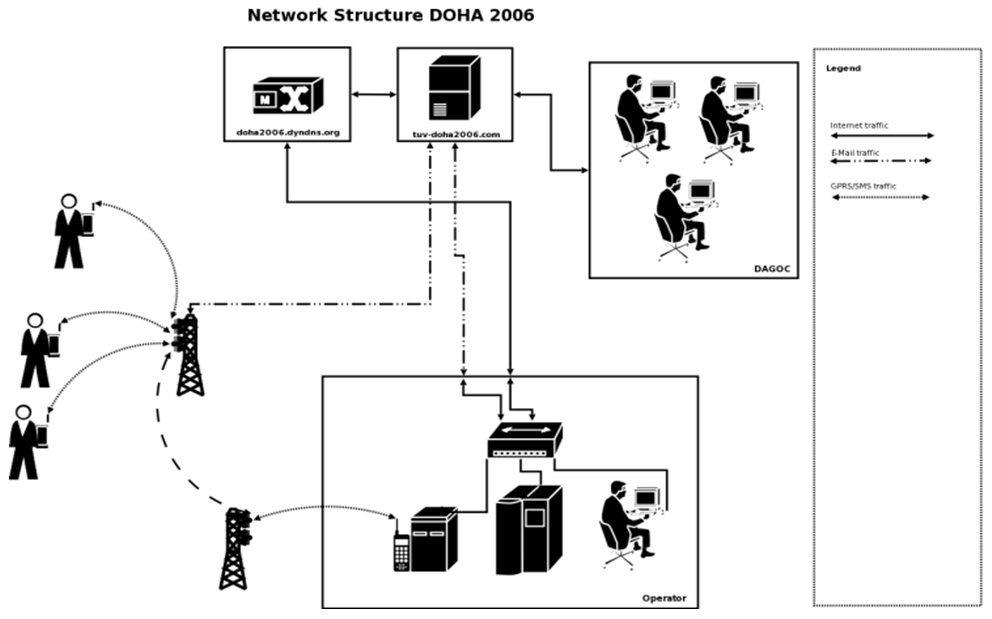
We hurriedly got together before the weekend and developed an initial idea of what such a system could look like. We decided on a classic client-server architecture, with the inspectors themselves to be equipped with so-called PDAs (“Personal Digital Assistant” – pre-precursors of today’s smartphones). Incoming test messages were to be managed via a Mapbender-based map. On Monday I called my acquaintance and agreed to the project, and just 2 weeks later we, our then administrator Lars and myself, were sitting on the plane to Qatar together with some TÜV people.
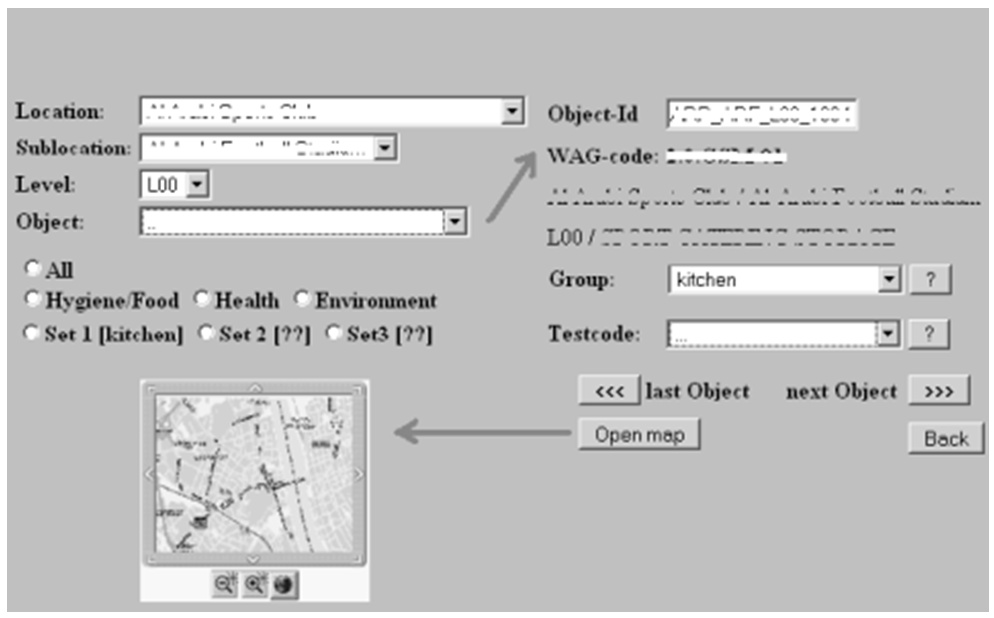
Once there, systems were developed and set up, geodata was collected and integrated, and I was given the honorable task of programming the test forms for the various tests for the PDAs. The only thing I was somewhat proficient in was a little HTML, PHP and JavaScript, so we built locally stored web forms, the content of which was sent to the central server by email after successful testing. It was not exactly helpful that the rather rudimentary browser of the PDAs could only partially interpret JavaScript, and there was of course no documentation. You were flying completely blind: So I wrote a function and then tested it first on the laptop, then on the PDA and with a bit of luck it worked – or not, then I had to try another way, test and hope and so on…
On the server, the incoming emails were parsed, geocoded according to the venue and entered into a PostGIS table and any photos were stored. A panel next to the WebGIS map was programmed in such a way that PHP queried this table every 2 minutes and picked up and displayed the tests stored there: red for “there is a problem here”, orange for “someone should take a look” and green for “everything is OK”. An employee of the local organizing committee DAGOC (Doha Asian Games Organisation Committee) could now view the tests and take remedial action based on the input of the testers and any images sent along.
There were several challenges to overcome, explaining the use of PDA and screen stick to the technically inexperienced TÜV inspectors, the morning generation and copying of the daily tasks to the PDAs or refuting prejudices against open source: For example, the administrator on the TÜV side insisted that at least one of the two servers should be equipped with a Microsoft operating system, but there was no real reason or necessity for this. Incidentally, a circumstance that was then eliminated in 2006, when both servers were operated under Linux from then on.
A Propos Server – one story is particularly memorable: It must have been in preparation for the 2006 Asian Games. The application was to be improved and made more user-friendly based on the experience of the 2005 West Asian Games. To save time, I usually worked directly on the server as “root”, although this was strictly forbidden by the administrator even then. Scripts were copied, edited locally and uploaded again for direct testing. At some point, the call “Hands off the keyboards” echoed through the office. “Is anyone still logged in as root?” asked Lars, our administrator. With a hint of humility, I cautiously replied “Yes, me”. “Thank God” Lars exclaimed in relief and explained that he had just changed the root password of the server but unfortunately forgotten it again immediately.
So we mastered the Asian Games and even if we had to shed a few feathers from a financial point of view, this early project brought our team together. One of the team, who was brand new at the time and took his first steps with us, was a student assistant named Marc Jansen….
In the end, it remains to be said that we certainly learned a lot from the approach back then. Nobody works directly on the server anymore, certainly not as “root”, and we only accept projects if we are sure that we have mastered the necessary technology. Finally, application development has long been handled by professionals.