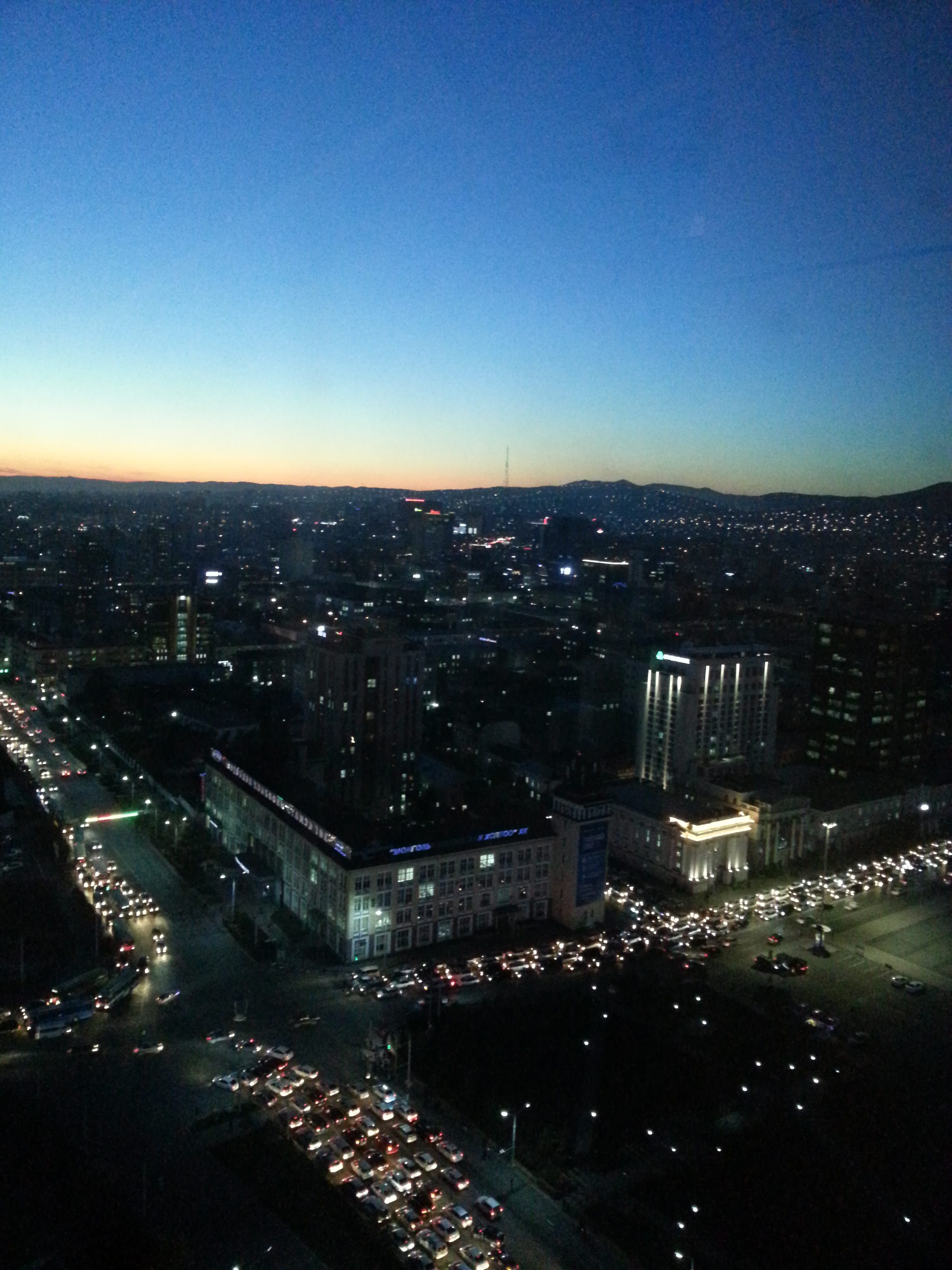
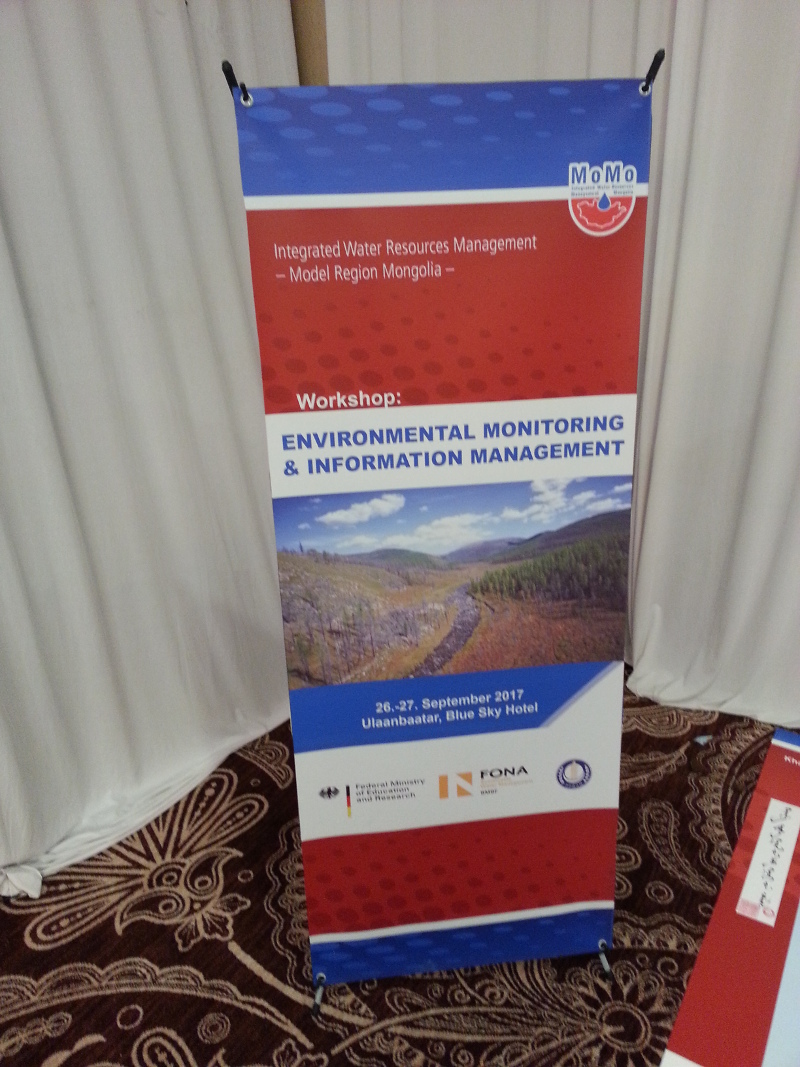
The purpose of the MoMo-Transfer Conference was to present and discuss the results achieved so far with a selected audience in order to make final adjustments in the remaining project period until May 2018 for a successful handover of the project to the Mongolian partners.

For this purpose, terrestris traveled to Mongolia one week before the actual conference to install a current version of the geoportal on servers of the Environmental Database Division (EDD; formerly Environmental Information Center – EIC). Furthermore, the lead time was used to prepare the 2-day ‘Environmental Data and Information Management (ENMA)’ workshop planned with the IGB.
In this context, the Kharaa-Yeröö River Basin Atlas, developed by the IGB, also played a major role. It was printed in Mongolia in an edition of 25 copies and distributed to selected representatives of the Mongolian project partners and the Editorial Board.
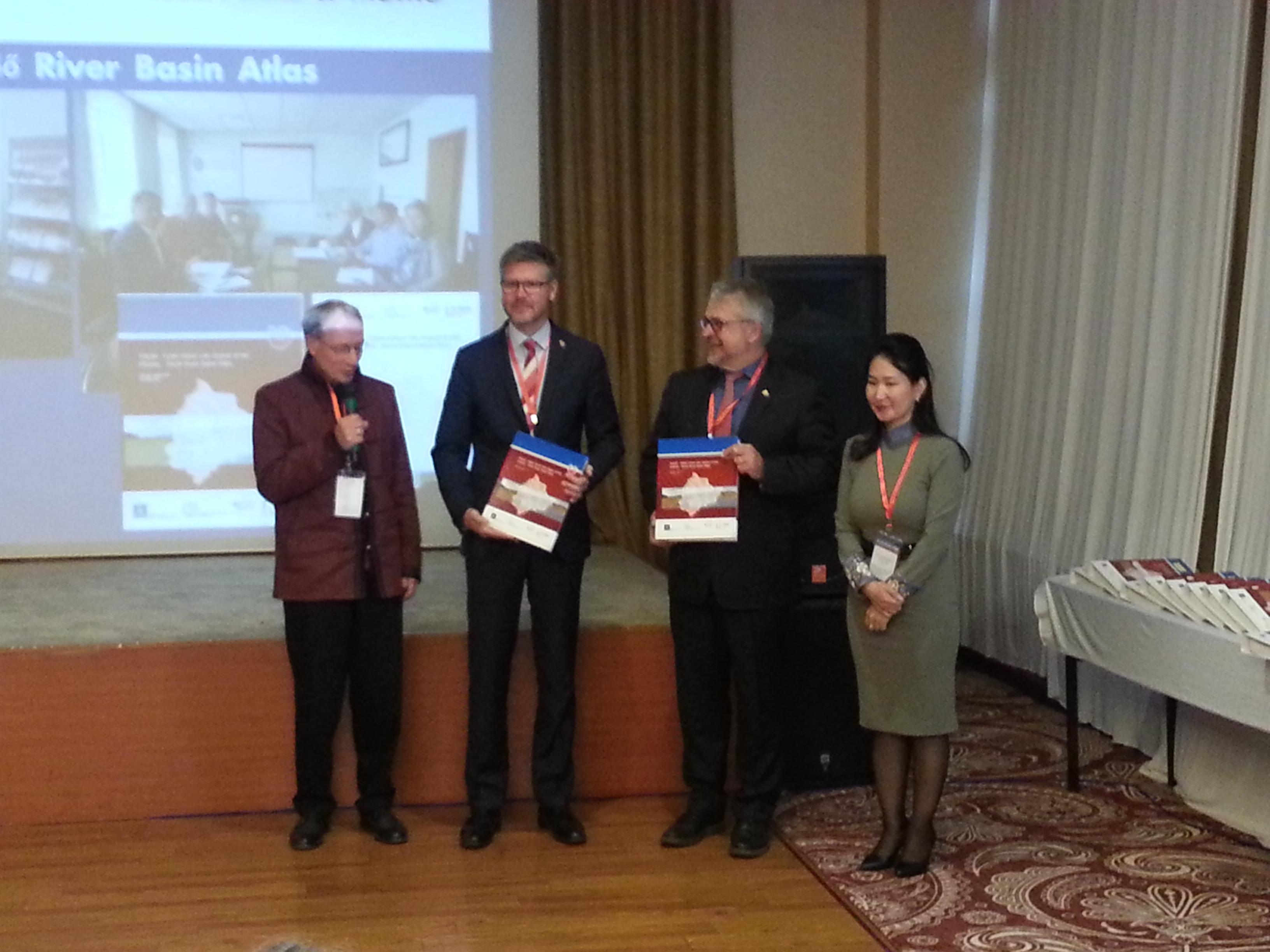
This 1st edition will be filled with further content until the end of the project and will be presented at the end of the project as a 2nd edition with 200 copies as a loose-leaf collection in a ring binder. This concept enables easy updating of content without having to print a completely new book each time.
The geoportal created by terrestris plays a central role here, because the maps are created in the geoportal and serve as a print template for the atlas. The so-called Document Management System (DMS) contained in the portal is able to record PDFs, so that in addition to maps, text, graphics, illustrations and the like can be inserted. The atlas with its current 106 pages is completely digitally available in the geoportal. The atlas is bilingual Mongolian / English and can be viewed here. (Attention: the file is 103 MB in size!)
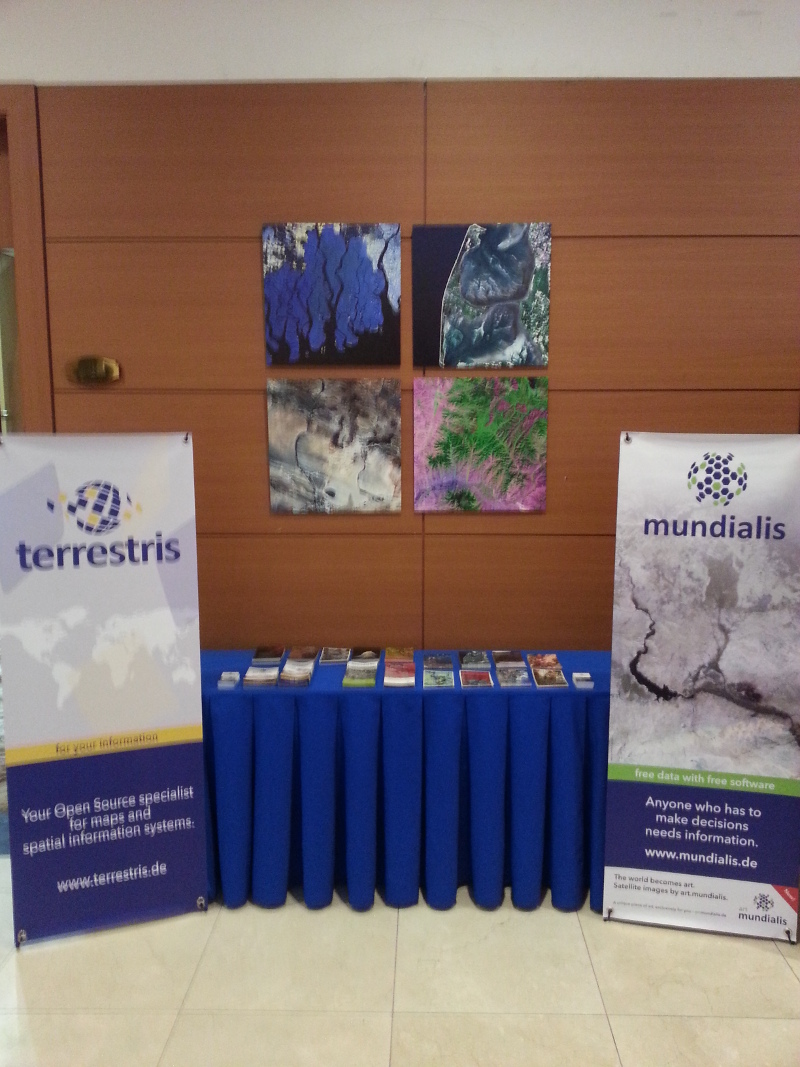
For the 2-day conference, a company stand was set up in the foyer of the conference hotel, with the partner company mundialis also represented with corresponding information material and satellite art. The postcards that were handed out in this context were very popular, so that not a single copy of these beautiful view copies had to be transported back to Germany.
In addition to approximately 65 interested visitors to the conference, representatives of the Federal Ministry of Education and Research (BMBF) and the Project Management Jülich (PTJ) were also on site, who provided the financial resources for the project. In discussions with BMBF and PTJ, it was expressed that the MoMo project, in the combination of the various actors of the natural and social sciences, the administration, the small and medium-sized enterprises (SME) from Germany, has done unique work. It is currently being examined to what extent the project can receive further funds to enable the transfer of the results to the entire Mongolia and other Asian countries.
The discussion on the occasion of the workshop largely dealt with the previously prepared policy briefs, i.e. recommendations for policy regarding environmental data and information management. On the day after the workshop, the results of the discussion were incorporated into the policy briefs and again distributed to the workshop participants for final approval, so that coordinated documents can be distributed to decision-makers in the responsible ministries.
The last day of the stay was used for a geodata management workshop at the Kharaa-Yeröö River Basin Administration in Darkhan, the second largest city in Mongolia, located about 200 kilometers north of Ulan Bator.
Overall, we can look back on an eventful 2 weeks in Mongolia, which have resulted in interesting contacts also to China and Kazakhstan.