terrestris – available for you everywhere!
Who doesn’t know this: The demands of daily business keep you on your toes and you just about manage not to be overwhelmed by events. Because you are dealing with interesting and rapidly developing technology, you come up with various ideas about what you could do differently and better. Unfortunately, you often lack the time to take care of it in a meaningful way. At this point, terrestris has come up with something special and is currently holding a retreat with a code sprint for the 3rd time. In essence, this means that the entire workforce retreats to a location for a week to take up the ideas that have been left behind and to discuss them in a pleasant atmosphere and immediately put them into practice.
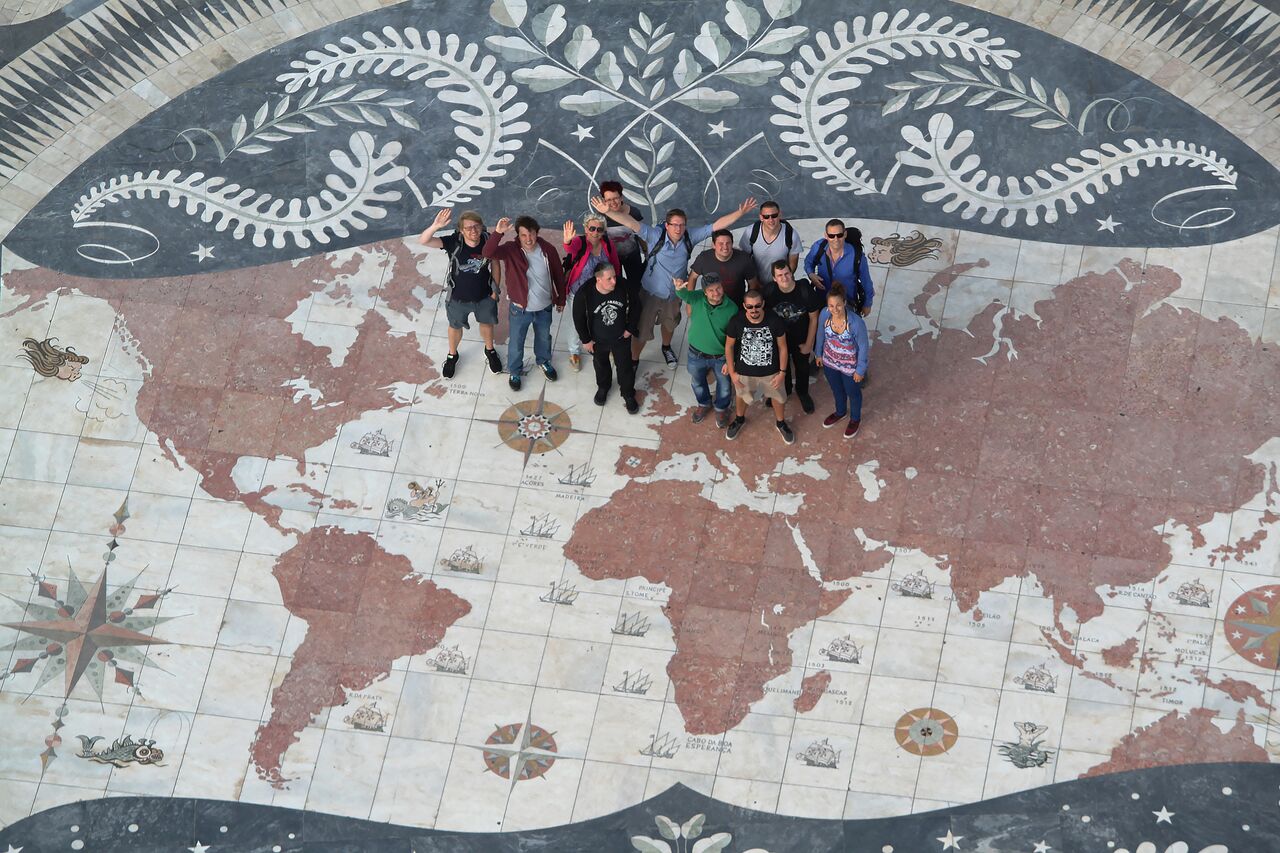
In 2011 our retreat took place in Mallorca, while in 2013 the choice fell on Croatia. This time our retreat went to Troia, Portugal. A minibus was already waiting for us at the airport in Lisbon to take us to our domicile. And we found it very good again!
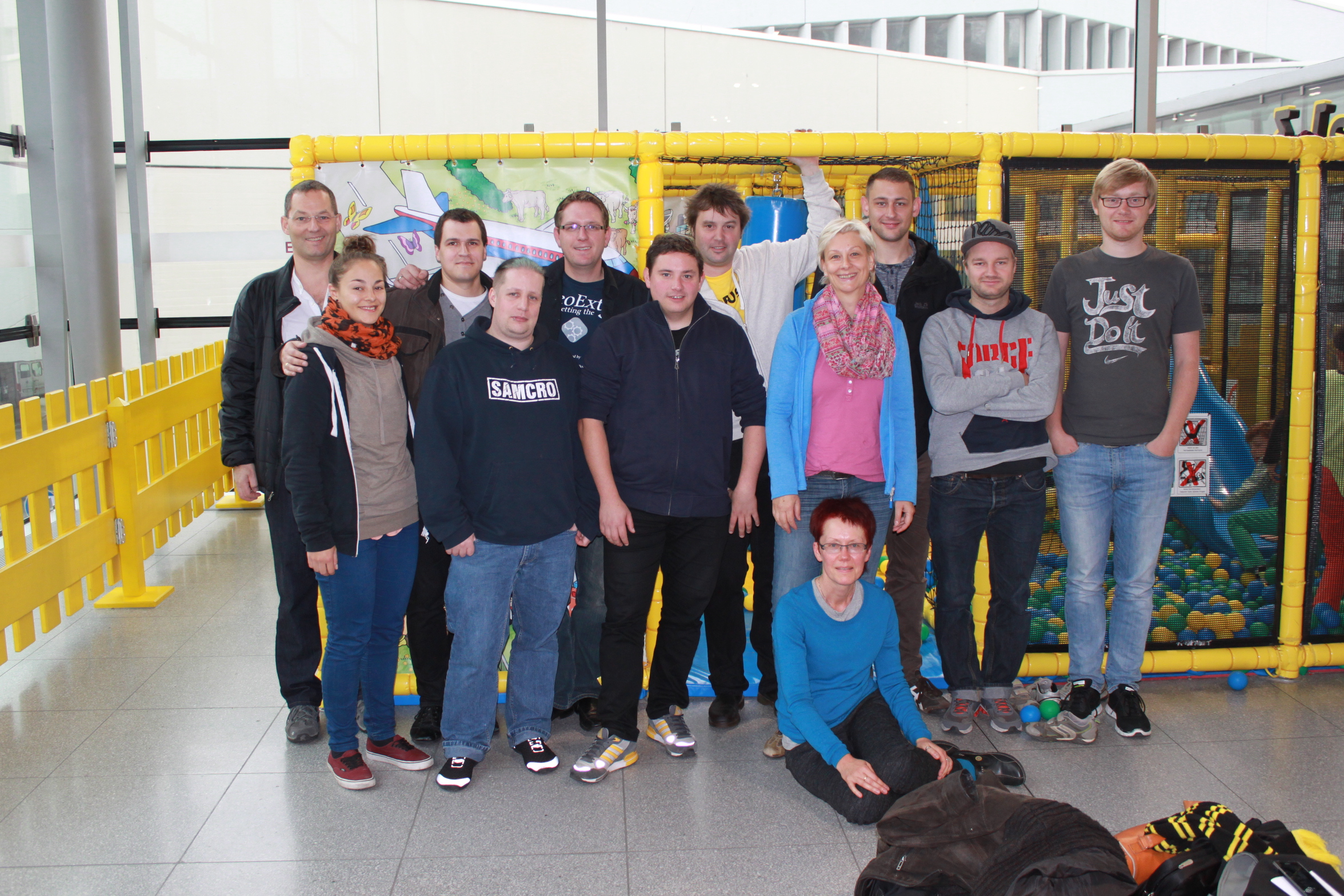

With intensive work, this year’s retreat also passed very quickly. At this point we would like to briefly report on the results:
We have been using SHOGun as middleware for our larger SDI projects for some time now. We used the week to advance the new development of SHOGun (namely SHOGun2, https://github.com/terrestris/shogun2). With the goal of ensuring good versioning and expandability of SHOGun2, basic developments regarding the architecture of the system were already carried out in advance. During the retreat, the focus was on the development of a data model. Attached is the result of the modeling:

It was also achieved that SHOGun2 is compatible with Java 8 (but also still with Java 7). In this context, we switched to the Maven plugin JaCoCo (test report/code coverage). Likewise, (Spring) beans were created for configurable content generation.
Work was also done on the SHOGun2 client. The client is an MVVM application (Model-View-ViewModel) based on the JavaScript frameworks Ext JS 6 (https://www.sencha.com/products/extjs/#overview), OpenLayers 3 (http://openlayers.org/), GeoExt 3 (https://geoext.github.io/geoext3/) and BasiGX (https://github.com/terrestris/BasiGX) that allows visual interaction with the SHOGun2 middleware. The central result of the code sprint is the development of an application viewport that dynamically builds up depending on the application context from SHOGun2. Thus, the application is fully configurable by the user and allows, for example, to individually control not only the individual layers but also the visible components of the client (legend panel or logo panel). The current status of the client can be found at https://github.com/terrestris/shogun2-client.
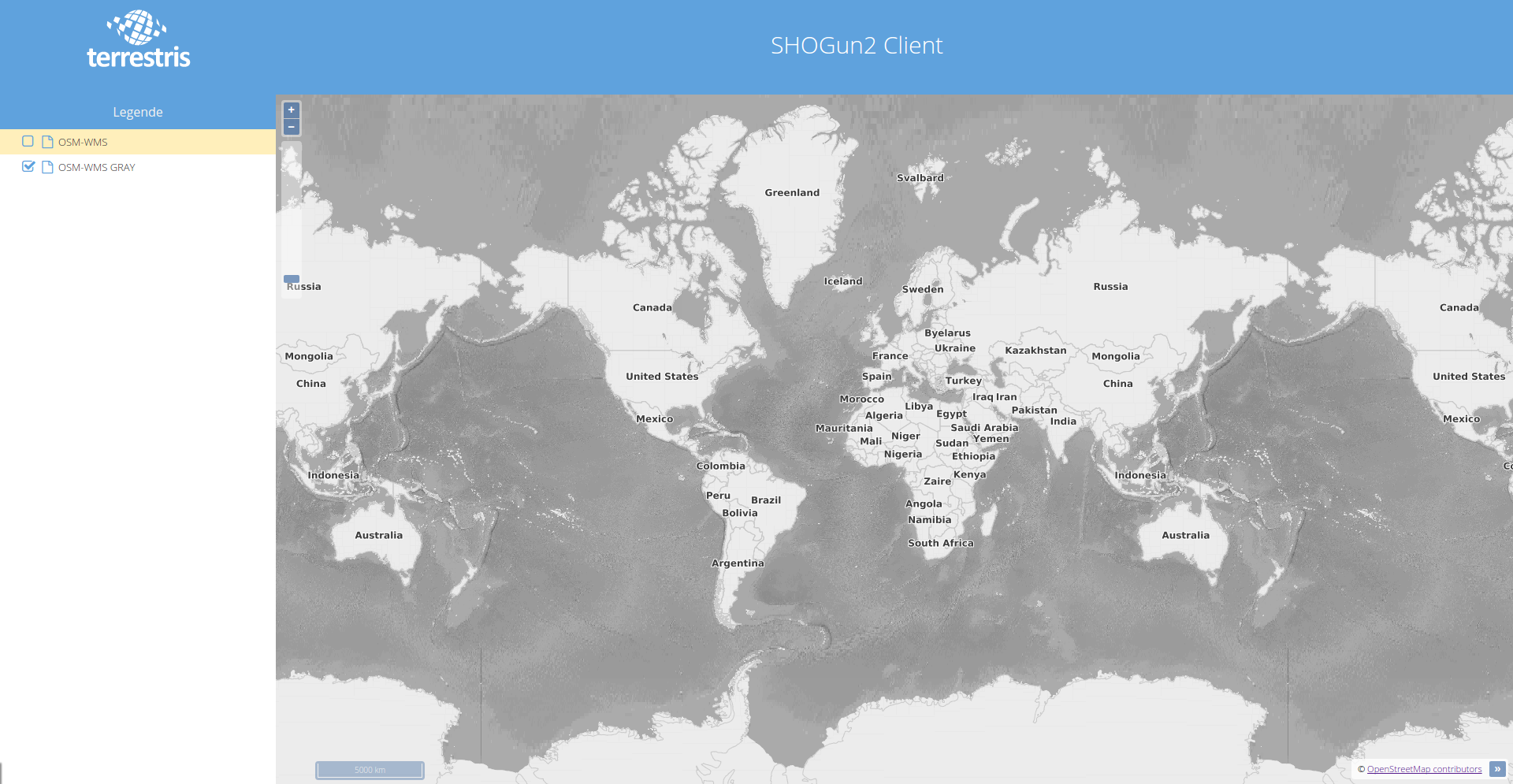
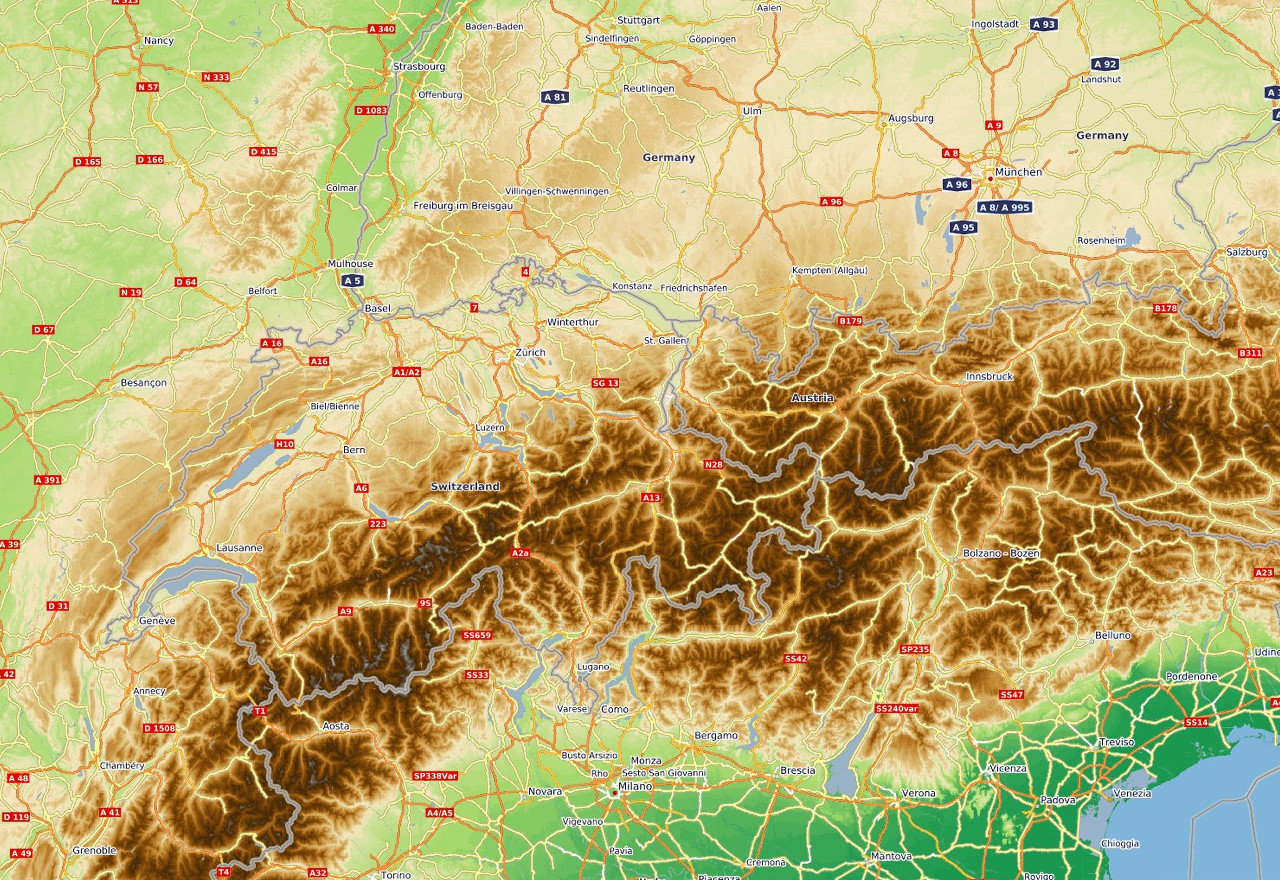
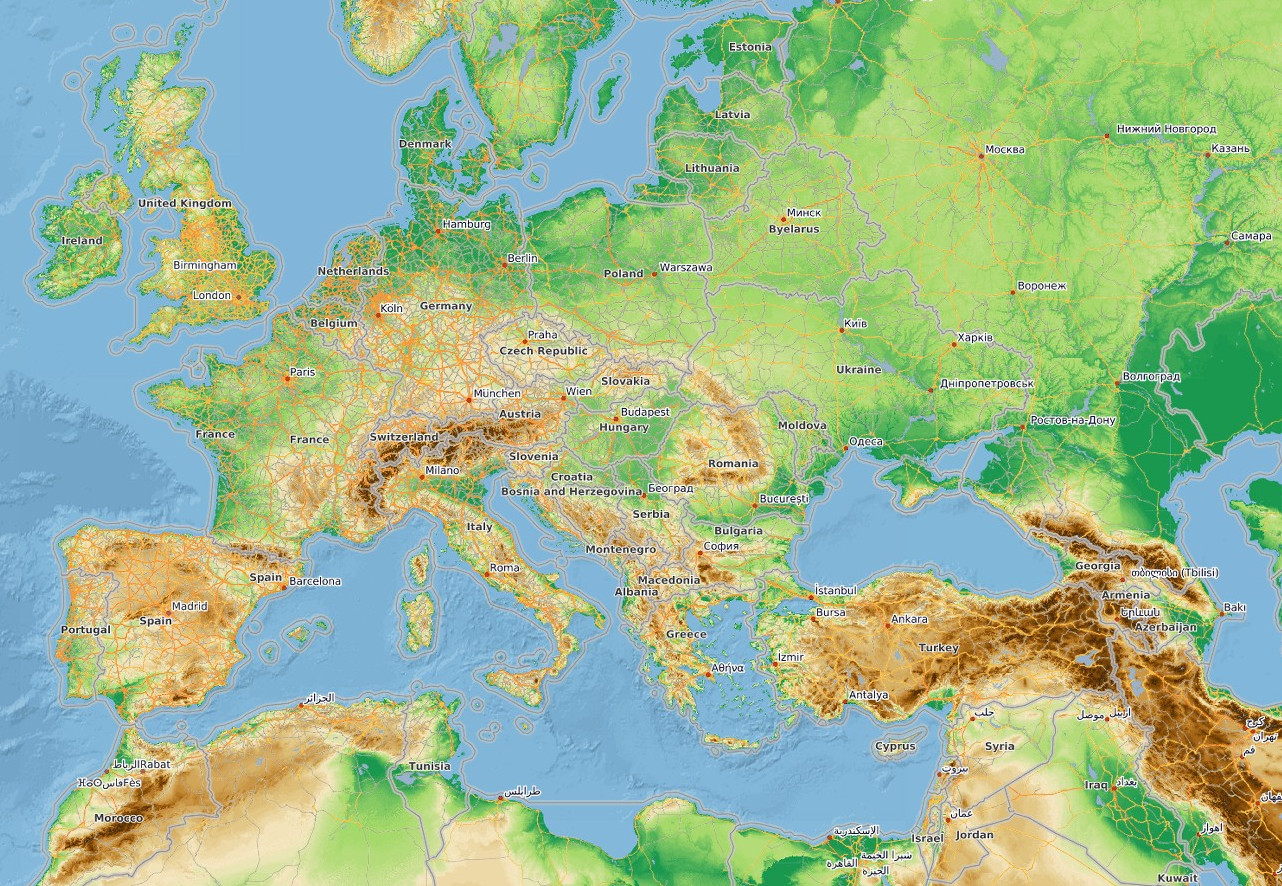
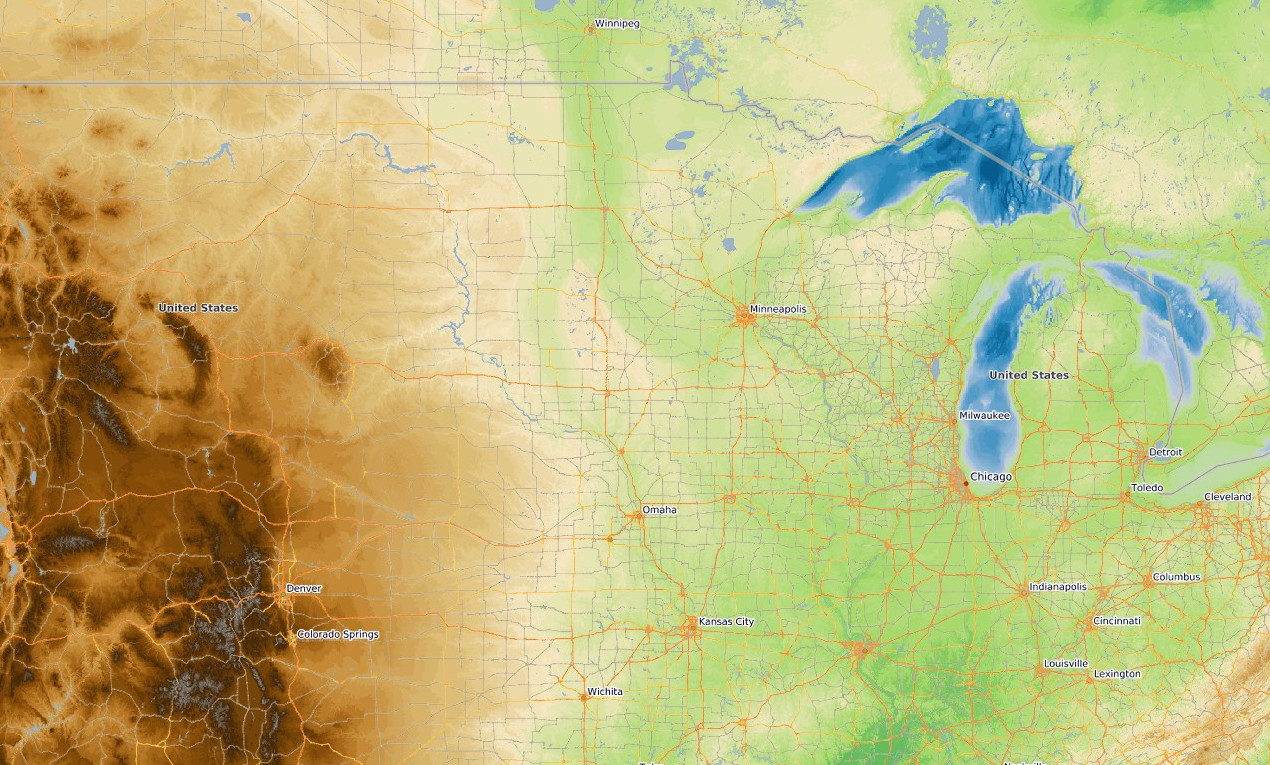
Furthermore, new layers for ows.terrestris.de were discussed. Specifically, these are 3 layers:
- Worldwide topography
- OpenStreetMap overlay with street network, local information etc.
- Combination of the two layers to a “Topo OSM WMS”
The layers are cached and therefore as performant as our existing OSM WMS. The corresponding example images can be found listed one below the other.
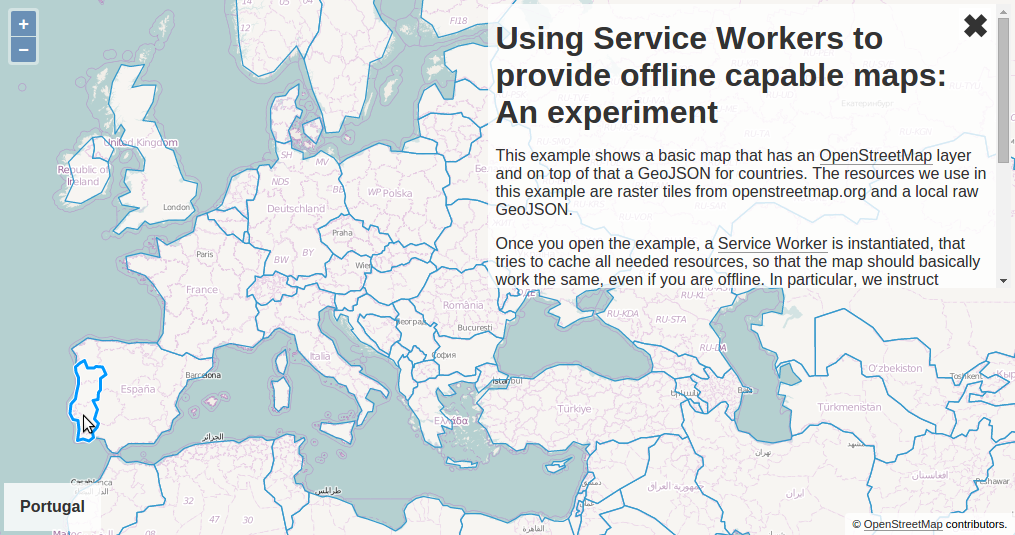
Service Worker Experiment is a new WebAPI that sits like a mediator between web application / website, browser and the network. Only the most modern browsers support it currently. From a long-term perspective, this can be another building block for offline-capable map applications that provide a large part of the classic WebGIS functionality. The code of the experiment can be found at github (https://github.com/terrestris/service-worker-experiment), and a demo application is located on the terrestris page at https://www.terrestris.de/service-worker/.
For a continuous improvement process regarding the control of projects, we have taken care of the optimization of the technical and organizational foundations for projects. The special focus was primarily on the merging of business, planning and technical documents. Among other things, a new project ID was designed and software for customer care, time recording and financial administration was tested. Work was also carried out on the presentation of the internal administrative processes as well as on the perfection of the address block as a template for the mail merge function with documentation. Another point was the revision and the English translation of the homepage terrestris.de.
Also this year we have realized again that you can work intensively for a whole week and still not manage to finish everything. This is due, among other things, to the many ideas that come to you along the way and the fact that you may have taken on too much. So the signs are not bad that a retreat with a code sprint will take place again in the foreseeable future. Where, we do not know yet, but it may be as pleasant again as it was in Portugal.