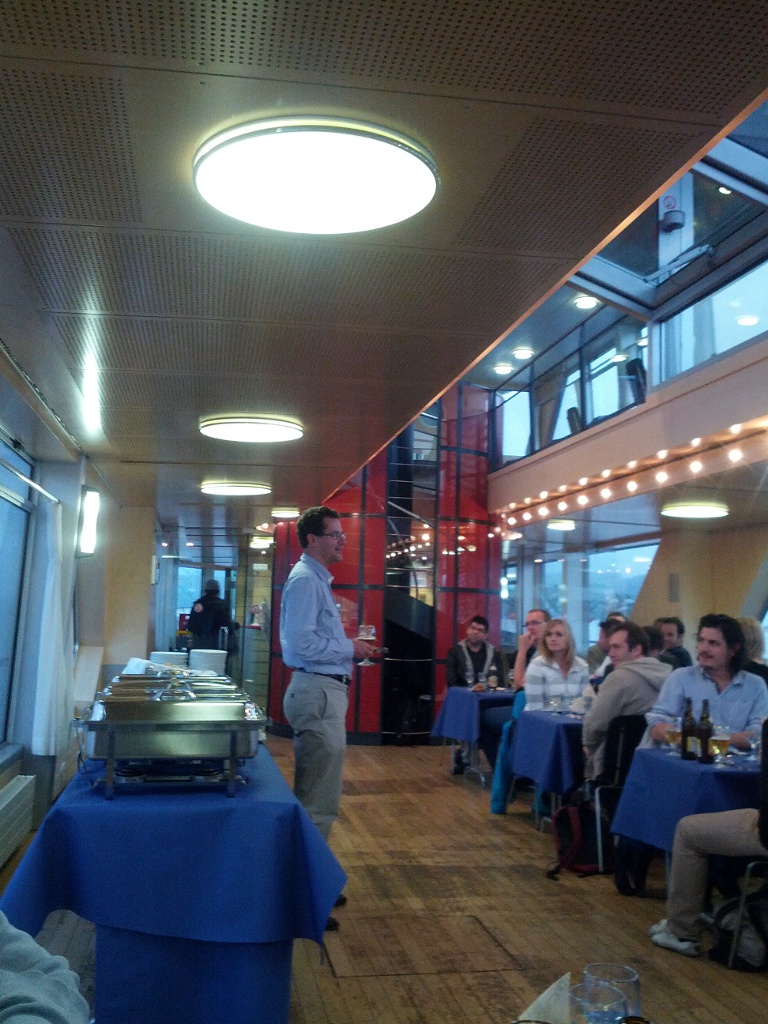
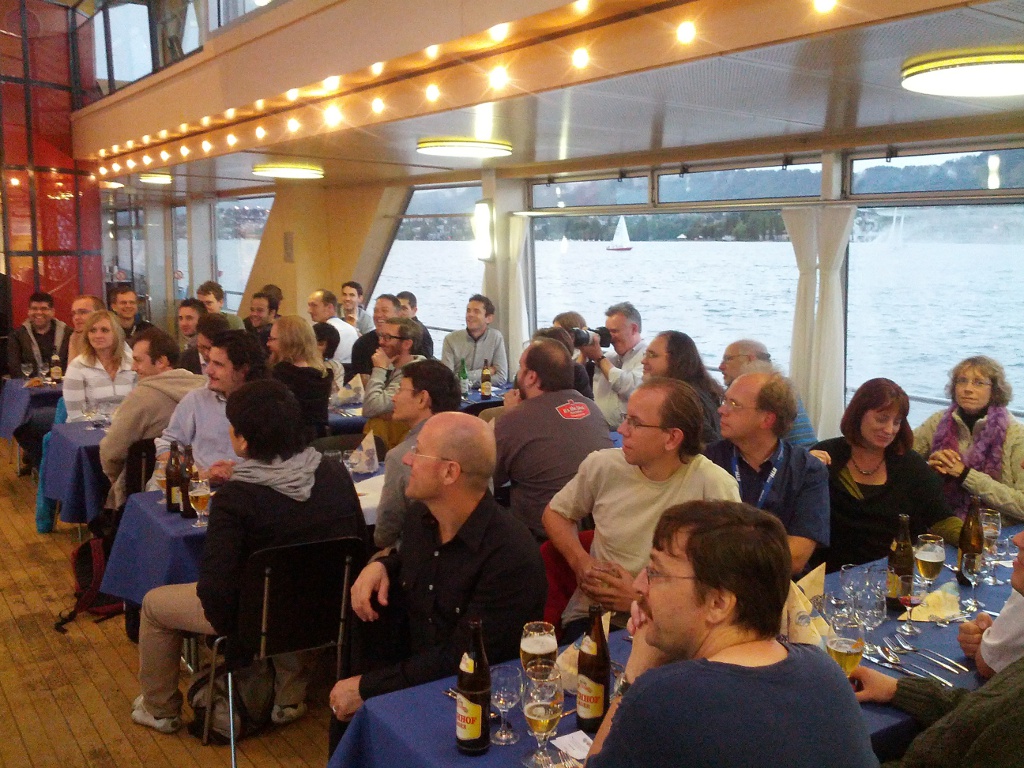
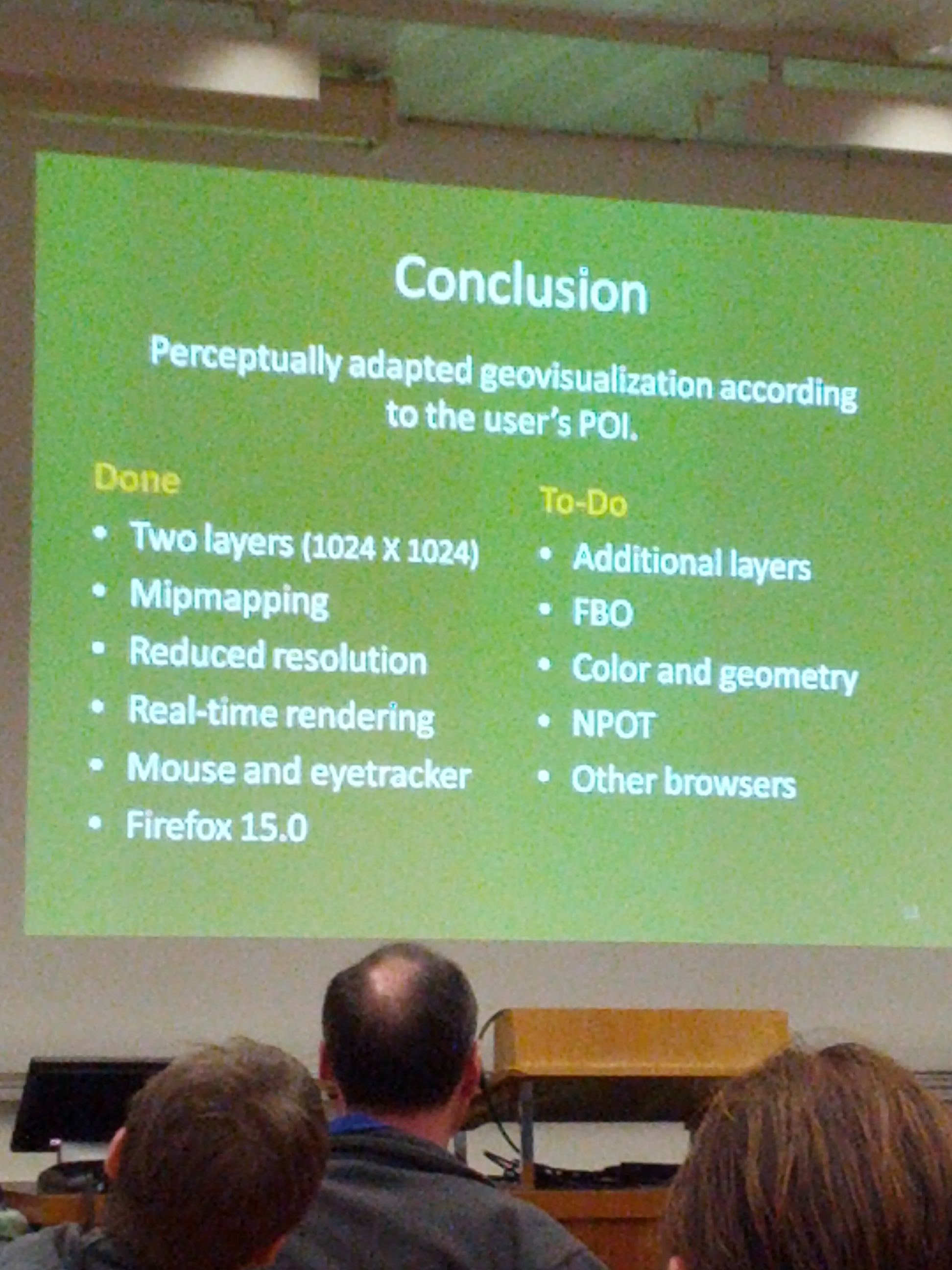
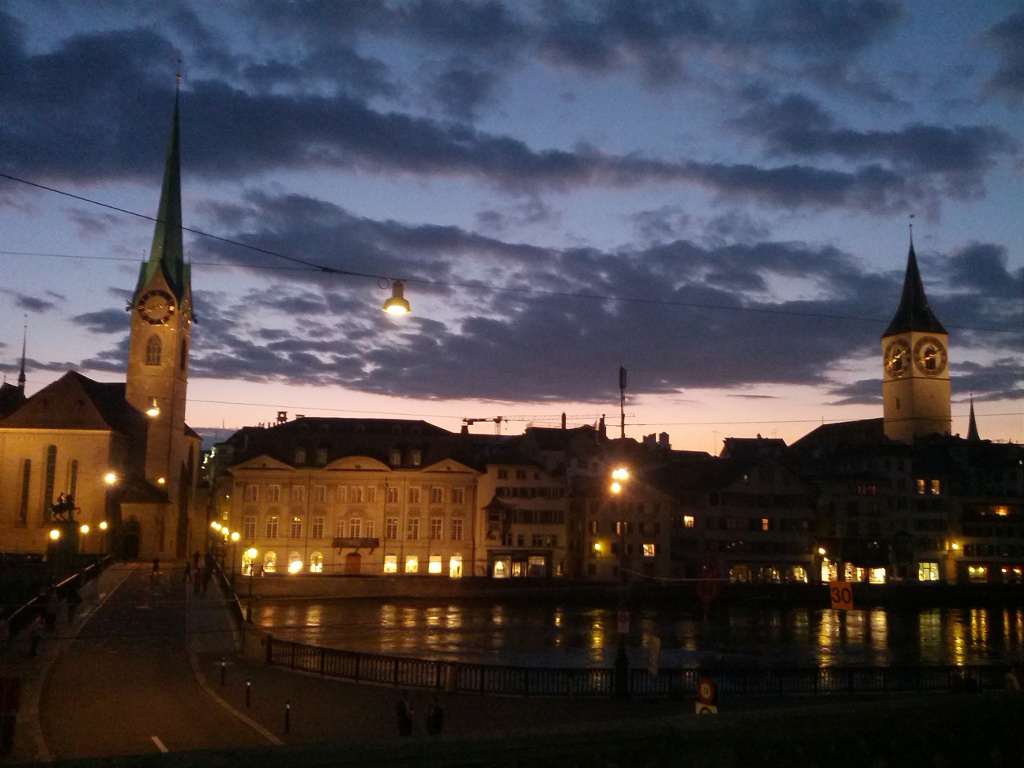
The WebGIS Wednesday at “The Graphical Web” (we reported) was rounded off in the evening with a boat trip on Lake Zurich. In pleasant company, the local cuisine could first be enjoyed before the evening came to a pleasant end with one or two technical discussions. Here, too, the very good organization, which characterized the entire conference, was to be praised.
After Wednesday was largely dedicated to “2D Web Mapping and Web-GIS”, Thursday focused on WebGL applications with a geographical reference.
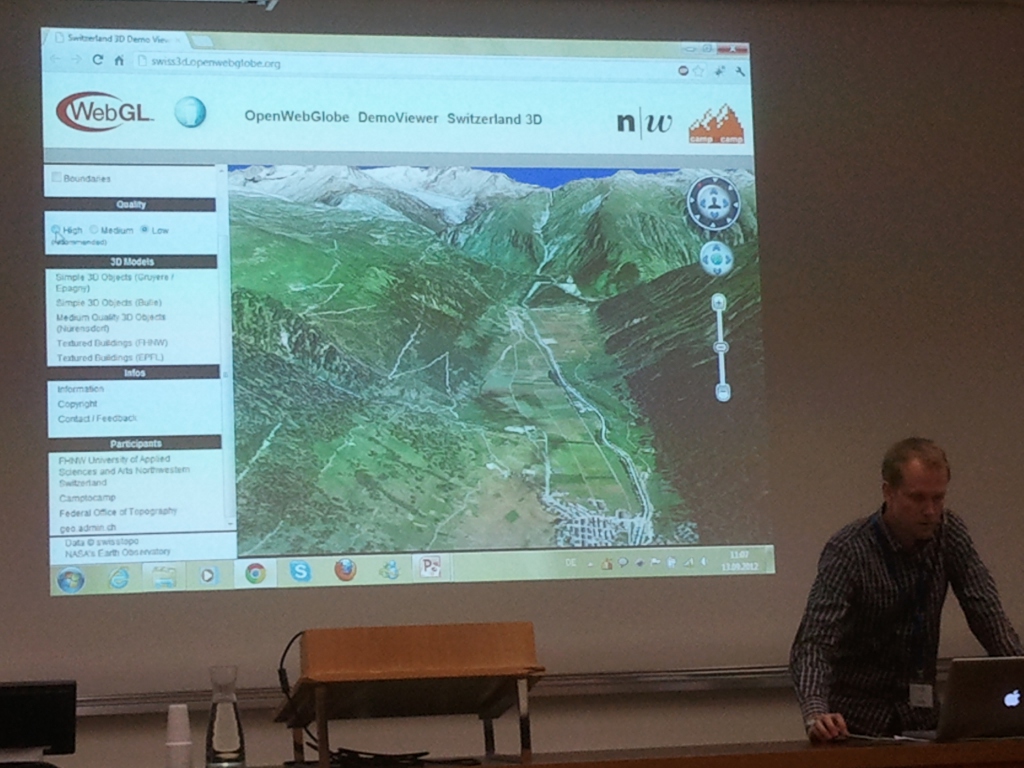
First, a dimension was added and two WebGL-based 3D globes were presented: Robert Wüest from the University of Applied Sciences Northwestern Switzerland presented, among other things, the Processing and Rendering Massive 3D Geospatial Environments using WebGL” the OpenWebGlobe Viewer and the associated SDK. This open source project (MIT license) looks very promising and will be upgraded to version 1.0 in mid-2013. terrestris will also soon be presenting a 3D web globe application with connection to further OpenGIS web services, e.g. a Sensor Observation Service.
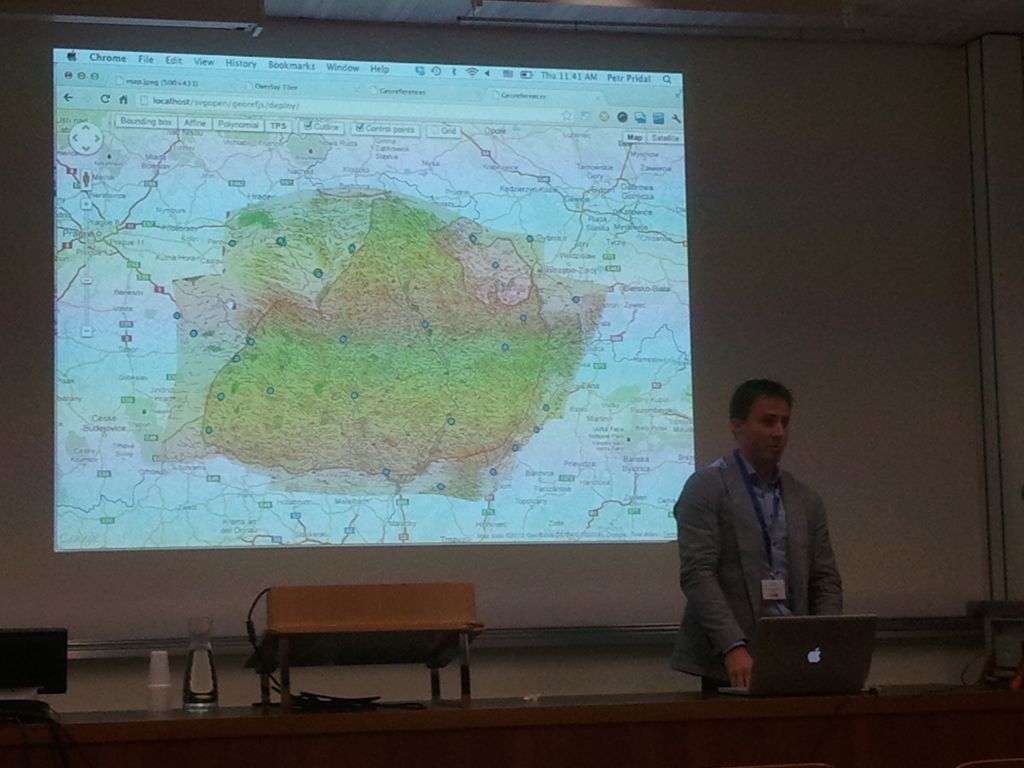
Petr Pridal from Klokan Technologies GmbH then presented another open source web globe: WebGL Earth (GPLv3 license). Here, too, a web-based globe can be integrated very quickly into any website using JavaScript and a simplified JavaScript-API. The presentation of Georeferencer, an online tool for georeferencing scanned maps, was also very impressive. It is impressive how normal such edits have become in standard browsers, where just a few years ago you still needed complex desktop software.
In the second block of lectures after the lunch break, “WebGL and SVG Applications”, there were consistently interesting presentations on visualization using WebGL and SVG, often with a geographical and spatial context.
From our point of view, the presentation of the development of a national atlas for the Netherlands by Barend Köbben (University of Twente – Faculty of Geo–Information Science and Earth Observation (ITC)) is worth highlighting. The aim here is to create a harmonized online map collection in the form of an atlas using data from the national geodata infrastructure. Only the geodata from several standard-compliant Web Feature Services (WFS) are retrieved from the GDI and visualized directly in the client. Afterwards, the closing keynote “Wow: Compelling Visual Experiences from the frontiers of Open Web” ended the official part of the conference.
On the final Friday, participants were offered eight different workshops. Among other things, terrestris employees Marc Jansen and Christian Mayer held a two-part workshop on the topic of “An introduction to building WebGIS applications with OpenLayers and GeoExt“. Marc Jansen started with an introduction to the JavaScript mapping library OpenLayers in version 2.12. Christian Mayer then provided insights into application development with GeoExt 2, which is available in a beta version after a code sprint in April. The workshop was very well attended with 10 participants and received very positive feedback from the participants.
terrestris would like to thank the conference management and the conference organization for the smooth running of the event and the support on site.